
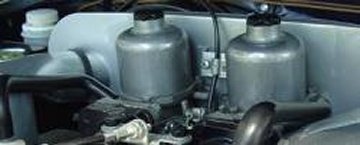
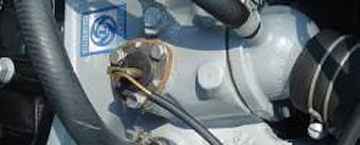
 This is a cautionary note enthusiasts with an MGBGTV8 should take seriously - there have been 20 reports of a near instant loss of braking from V8 members who have had that spine chilling experience with their MGBGTV8. When the servo fails and swallows the brake fluid it leaves you with a foot flat on the floor and no brakes. It's a truly alarming experience as those 20 members will tell you. If your servo has not been changed or at least checked since the car left the production line at the Abingdon plant, then we would urge you to have a 50 year old brake servo examined off the car and where necessary have it professionally refurbished. An alternative is to invest in a new servo because the reliability of your V8 brakes is not something to scrimp on – that cost is modest in terms of your peace of mind and your safety! New servo Updated: 261001 Posted: 140504 |
|
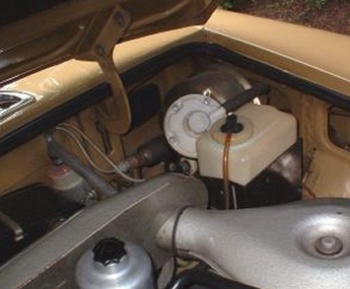 dampness on the drum inside the tyre. Often you also get an indication of a problem through a reduction in or a clear change in brake efficiency. The note ended with the advice - "whatever you do, don't scrimp on brake and servo maintenance. A replacement servo costs around £300 or as an alternative you can have a good unit refurbished with new seals. A small price to pay for reliable brakes!" New servo from B&G Glycol and silicone brake fluids topic The use of slicone fluid as an alternative to glycol came up as part of the servo failure topic. Silicone brake fluid Low brake fluid sensor Bob Owen developed a useful device to detect low brake fluid levels. See V8NOTE332 on his TE low brake fluid sensor and the detailed installation note, V8NOTE332. More How a servo works More |
|
V8
Register - MG Car Club --- the leading group for MGV8 enthusiasts
|
||

